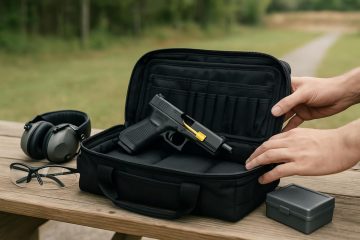
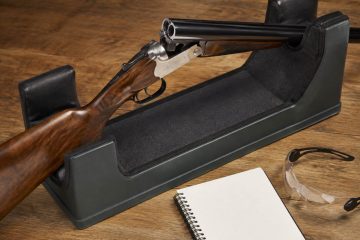
You only need a rifle practice notebook if the contents will cover useful questions about your shooting later on. Why did a known load suddenly behave differently? Was the rifle checked properly prior to firing the first shot? Did the wind, light or temperature change during your shooting session? A simple notebook helps to distinguish between problems with your equipment and problems with your range. Having a practice notebook also helps you to plan your shooting sessions in a more safe and focused manner.
Start with a repeatable page layout
Use a consistent page layout and leave adequate space to complete each field. Note that different types of shooting practice have different criteria. Therefore a zero check shot, a slow fire shot and a function check shot must not be judged by exactly the same criteria.
When recording information about the rifle, write down its identifying details so you can tell it apart from the other rifles you own. Record the cartridge as stated by the manufacturer, the sight or optic, and any special setup you have applied. For the ammunition, record the manufacturer and load designation as printed on the box. For different lots of the same ammunition record the details in your notebook in different entries.
A useful page might include these prompts:
– Date, location and range direction
– Rifle and sighting equipment
– Ammunition and lot information, if provided
– Planned exercise and distance
– Weather and surface conditions
– Results, observations and follow-up action
The notebook should not contain any information that, when lost, could be used to identify you or provide unauthorized access to your guns or premises. Your practice record is meant to help you be a better shooter, not to put you in danger.
Capture weather without pretending it is exact
Weather for shooting can change quite quickly so it is worth recording the conditions before you start your session, and adding any changes as you go. Useful observations for weather include wind direction and whether it is steady or not, cloud cover, sun angle, temperature and whether it is rising or falling, and any rain or moisture.
It is useless to measure the wind if you don't have an accurate instrument to do so with. If you don't have a reliable anemometer to take wind readings with, then simply record your best description of the weather at the time, e.g. 'light, variable wind', 'steady crosswind with occasional stronger gusts', etc. Indicate if you observed the wind to be blowing at the firing point, downrange, or a combination of both. Remember that a range can appear to be calm for shooting near a bench, whereas further downrange (e.g. with targets in vegetation or behind flags), it can be quite different.
Light: Notes regarding the amount of light that can affect how a shooter sees their target, particularly when using optics. Such notes could reference the amount of time that the shooter was shooting in bright sun or deep shade, or the amount of time that was spent shooting with glint or changing contrast that affected what the shooter could see of the target face. The shooter may note that the target face was only partly in shade at the end of the session.
Include in the practice record a note of the shooting surface, e.g. was the bench stable? Was the ground wet? Did the shooter change his or her support for any reason? Were there any other activities going on that could have affected the shooter in any way?
Separate the rifle check from the shooting result
Record all visible aspects of a firearm before taking it out to practice. This would include whether a loose optic mount had been left on, whether all the correct ammunition had been taken, whether the bore and chamber of a firearm to be cleaned had been checked for any signs of previous use, whether safety equipment has been put away properly and whether storage is in order.
Make sure to record all visible problems. They need to be documented and if necessary repaired by a qualified person. As a shooter you should not test suspected faults of firearms in practice shots.
Even maintenance notes can be brief but be very specific to the parts that were cleaned/lubricated etc and any issues that may have been discovered which require further attention. Always refer to the manufacturers written instructions for any maintenance that is to be carried out and be very aware that there will be differences for different materials/finsihes etc and also for different models of guns.
This is also very important to distinguish between a technical error (e.g. a loose screw for the optic mount) and a shooting error (e.g. shooting off the wrong position).
Write observations that can be acted on
Numbers are useful but also easily abused. It is necessary to note the diameter of a group (and the location of its center), the reference point for aiming, the support used, the firing rate, and whether the shot(s) were taken as part of a deliberate exercise or as an afterthought.
Add a note about the shooter too: note any difficulty with getting a good sight picture, any inconsistency in trigger pull, and how you felt overall. Include any other factors that might have caused a problem such as fatigue, cold fingers, external noise, etc. Keep it simple and neutral – last shots opened after a break in position is better than 'bad shooting'.
Wait a week or two to see if your results have changed before reaching any conclusions about whether or not you need to be making some changes to your shooting, and then carefully cross reference your notes for your shots on the same topics (e.g. ammunition, weather, range setup, shooter's position, optic/sight setup, etc…).
Note also any shootings that have to be abandoned before you have shot the number of times you intended. This could be due to wind that has increased to such an extent that the exercise cannot be conducted safely in accordance with the range rules.
Review patterns before changing gear
After a practice session write down within a few days the things which you still have to do (follow up). As a rule the follow up actions should be kept very short and very specific.
When considering the need to make changes to an optic, stock, etc. for improved accuracy, look for patterns of inaccuracy in past shooting sessions. Also, be extremely cautious when making changes to your firearm that could affect its safety, or cause it to become unreliable. Always consider getting advice from a qualified gunsmith, etc.
Remember to store the shooting notebook with the rest of the firearm's records in a secure location (e.g. inside a locked cabinet or safe). Storing the notebook with the firearms can be useful, but store the ammunition for those firearms separately. Range rules and laws regarding firearm transport, storage, and use can change at any time so make sure to check with local authorities for current information as opposed to referencing outdated information in your notebook.
Keep your range notes simple. Record what you have done, and detail what you intend to do next. These simple notes will, in time, make your practice less a series of hits and misses and more fun. Further, your notes will form a reasonable basis to inform your purchasing decisions and your firearms maintenance.